
Your website is often the first interaction potential customers have with your business. It introduces your services, communicates your value, and helps visitors decide whether they can trust your company.
When planning a new website, one of the most important decisions is whether to choose a custom website or a template website.
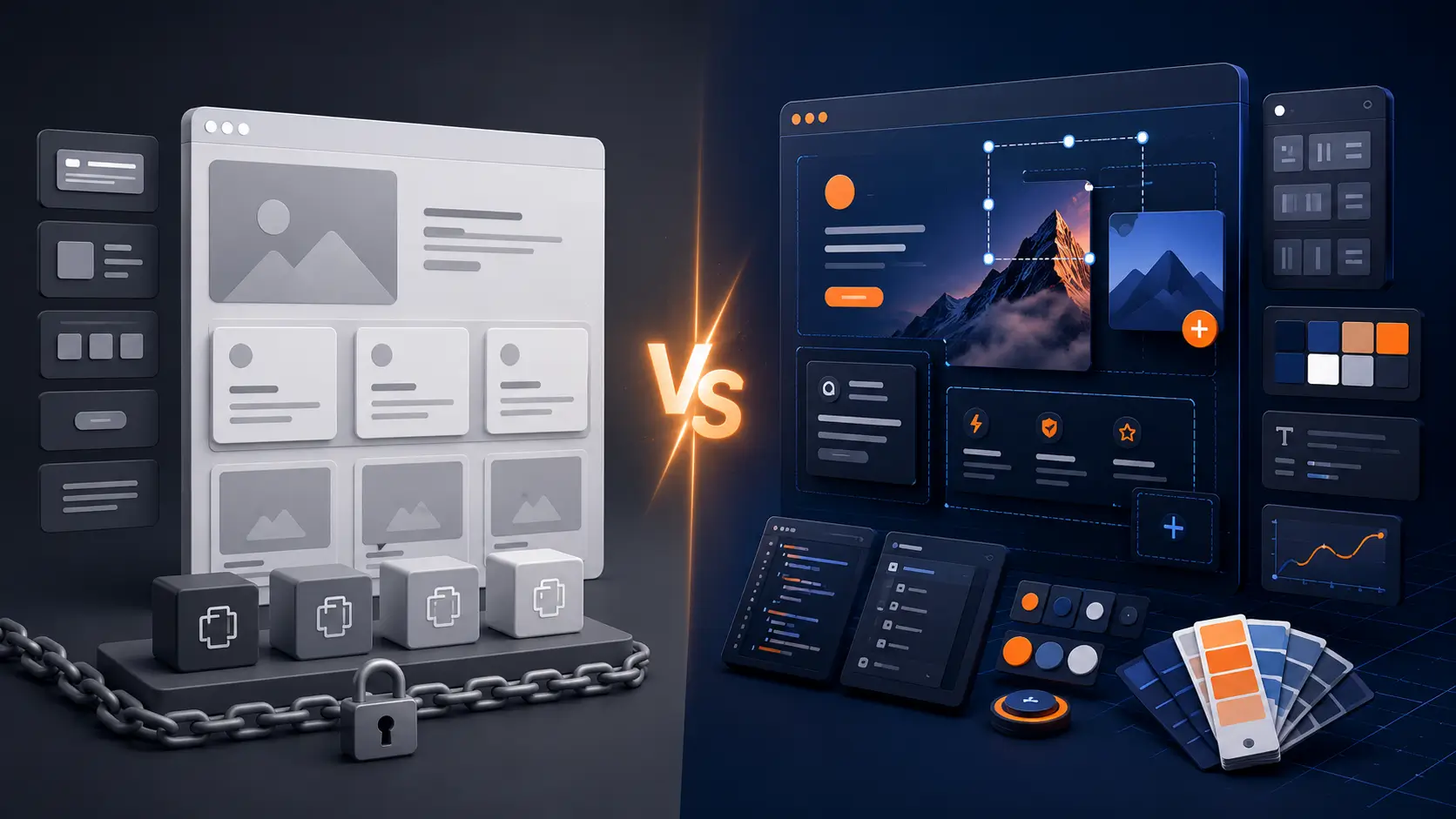
A template website offers a faster and more affordable starting point, while a custom website provides greater flexibility, originality, and long-term scalability. Neither option is automatically right for every business. The best choice depends on your goals, budget, timeline, features, and future plans.
In this guide, we will compare custom websites and template websites so you can choose the most suitable solution for your business.
What Is a Template Website?
A template website is created using a pre-designed layout. Instead of building every page and design element from the beginning, developers customize an existing theme with your content, colors, images, and branding.
Templates are available for platforms such as WordPress, Shopify, Wix, and Squarespace. Many templates include ready-made sections for service pages, contact forms, image galleries, blogs, and online stores.
This approach can significantly reduce the time required to launch a website.
Benefits of a Template Website
A template website can be a practical option for small businesses, startups, personal brands, and companies that need a simple online presence.
Its main benefits include:
- Faster development and launch
- Lower initial development cost
- Ready-made page layouts
- Easier setup for basic websites
- Access to standard website features
- Suitable for businesses with limited requirements
A well-selected and professionally customized template can still create a polished and effective business website.
Limitations of a Template Website
Although templates are convenient, they can become restrictive as your business grows.
The design may be used by many other businesses, which can make it harder to create a unique identity. Some templates also contain unnecessary features, scripts, and plugins that can affect website performance.
Common template limitations include:
- Limited design flexibility
- Similar appearance to other websites
- Dependence on theme developers
- Unnecessary code and features
- Compatibility issues after updates
- Difficulty adding advanced functionality
- Limited control over the user experience
Templates are generally most effective when your website requirements are simple and unlikely to change significantly.
What Is a Custom Website?
A custom website is designed and developed specifically for your business. Its layout, features, user journey, and visual style are created around your goals rather than being fitted into an existing template.
The development team first studies your business, audience, services, competitors, and technical requirements. Designers then create a unique interface, while developers build the required functionality.
Every major decision is based on what the website needs to achieve.
Benefits of a Custom Website
A custom website gives your business greater control over its appearance, performance, functionality, and future development.
The main benefits include:
- Unique design based on your brand
- Better control over website performance
- Flexible features and integrations
- Scalable architecture
- Improved user experience
- Stronger brand differentiation
- Cleaner and more purposeful development
- Easier expansion as the business grows
A custom website is not limited by the structure of a pre-built theme. New features can be planned around your processes and customer requirements.
Limitations of a Custom Website
Custom development requires more planning, design, development, and testing. Because of this, the initial investment is usually higher than using a template.
A custom website may also take longer to launch, particularly when it includes complex features, integrations, or multiple user roles.
Possible limitations include:
- Higher initial cost
- Longer development timeline
- More planning required
- Dependence on an experienced development team
- Additional testing for custom functionality
However, for businesses with long-term growth plans, the flexibility of custom development can provide greater value over time.
Custom Website vs Template Website: Key Differences
Understanding the differences between the two options can help you make a more confident decision.
1. Design and Brand Identity
A template provides an existing design structure. Colors, fonts, images, and some layouts can be changed, but the overall structure may remain similar to other websites using the same theme.
A custom website is designed around your brand. The page structure, visual hierarchy, spacing, interactions, and user journey can all be developed specifically for your audience.
For businesses that want to build a distinctive and memorable identity, custom design offers more creative freedom.
2. Development Time
Template websites are generally faster to develop because the basic layout and functionality already exist.
A simple template-based website may be prepared within a relatively short period, depending on the amount of content and customization required.
Custom websites take longer because the design and development process begins with research and planning. Wireframes, interface designs, development, testing, and revisions must be completed before launch.
A template is often better for urgent launches, while custom development is better when quality and long-term flexibility are the priority.
3. Initial Cost
Templates normally have a lower initial cost. This makes them attractive to startups and small businesses working with limited budgets.
Custom websites require a larger investment because designers and developers create a solution specifically for the business.
However, the lowest initial price does not always provide the best long-term value. A template may eventually require additional plugins, redesigns, performance improvements, and technical fixes.
The decision should therefore consider both the starting cost and the expected future requirements.
4. Website Performance
Website performance depends on several factors, including hosting, image optimization, coding quality, plugins, and third-party scripts.
Some templates include features that your website does not need. These extra scripts and design components can make the website heavier and more difficult to optimize.
A custom website can be developed with only the features required for the project. This provides greater control over code quality and performance.
However, a professionally optimized template can still perform well. The quality of implementation is just as important as the development approach.
5. Search Engine Optimization
Both custom and template websites can be optimized for search engines.
A template website can support SEO when it uses a clear structure, responsive design, optimized content, proper headings, metadata, and fast-loading pages.
Custom development provides more control over technical elements such as page structure, schema markup, internal linking, Core Web Vitals, and code efficiency.
The website type alone does not guarantee higher rankings. SEO success also depends on content quality, search intent, competition, authority, and ongoing optimization.
6. Features and Integrations
Templates usually support common features such as contact forms, blogs, appointment bookings, portfolios, and online stores.
Additional functionality is often added through plugins or third-party applications. This approach is convenient, but installing too many plugins can create performance, maintenance, and compatibility challenges.
Custom websites can include features designed around your exact workflow. These may include:
- Customer portals
- Custom dashboards
- Booking systems
- Membership platforms
- Inventory management
- Payment gateway integrations
- CRM integrations
- Automated workflows
- Role-based access
- Third-party API connections
Businesses with specialized processes will usually benefit more from custom development.
7. Scalability
A template may be enough when your website only needs a few pages and basic features.
Challenges can appear when the business needs new functionality, additional user types, advanced integrations, or major changes to the existing structure.
A custom website can be planned with future growth in mind. Its architecture can support new features, services, locations, and integrations without requiring a complete rebuild.
For a growing business, scalability should be considered before development begins.
8. Maintenance and Updates
Template websites rely on themes, plugins, and platform updates. These components must be updated regularly to maintain security and compatibility.
An update to one plugin can sometimes create problems with another plugin or the active theme. Regular backups and testing are therefore important.
Custom websites also require maintenance, including software updates, security monitoring, backups, and performance checks. However, the development team has greater control over the website’s components and codebase.
Both options require ongoing care. A website should not be treated as a one-time project.
When Should You Choose a Template Website?
A template website may be the right choice when:
- You have a limited starting budget
- You need to launch quickly
- Your website has simple requirements
- You only need standard pages and features
- Your brand does not require a completely unique design
- You are testing a new business idea
- You do not expect major technical changes soon
Templates can work particularly well for portfolio websites, small service businesses, personal brands, blogs, and basic company websites.
The template should still be customized professionally so that the final website reflects your business rather than looking like an unchanged theme.
When Should You Choose a Custom Website?
Custom website development may be the better option when:
- Your business needs a unique digital identity
- User experience is important to your sales process
- You require specialized features
- Your website must connect with other systems
- You expect the business to grow
- Website performance is a major priority
- You want complete control over the design
- Your competitors already have strong websites
- The website is central to your business operations
Custom development is especially valuable for established businesses, SaaS companies, online platforms, marketplaces, agencies, and companies with complex workflows.
Can a Template Website Be Customized?
Yes, a template can be customized to a certain extent.
Developers can modify colors, typography, images, spacing, page sections, headers, footers, and other visual elements. Advanced developers may also modify the theme’s code.
However, extensive customization can remove the original benefits of using a template. If major structural changes are required, customizing the theme may become complicated and expensive.
In that situation, custom development may provide a cleaner and more reliable solution.
Before selecting a template, clearly define the required pages, features, integrations, and future plans.
Which Option Provides Better Long-Term Value?
The answer depends on how the website will support your business.
A template website can provide excellent value when your requirements are straightforward. It allows you to establish an online presence without making a large initial investment.
A custom website can offer stronger long-term value when your business depends on its website for lead generation, sales, customer management, or internal operations.
Consider the following questions:
- Will the website need new features in the future?
- Does your business require a unique design?
- Are competitors offering a better online experience?
- Will the website connect with external software?
- How important are performance and scalability?
- Is the website expected to generate revenue?
- Will different users require different access levels?
Your answers will help determine whether a template is sufficient or custom development is a more appropriate investment.
Custom Website or Template: Final Decision
There is no single solution that is best for every business.
A template website is suitable when you need a simple, affordable, and fast website. It provides a practical way to launch your online presence using established layouts and features.
A custom website is better when your business requires originality, advanced functionality, scalability, and complete control over the user experience.
The most important step is to choose a solution based on your business goals rather than selecting an option based only on price.
A professionally planned website should support your current requirements while providing enough flexibility for future growth.
Build the Right Website With OctanSoft
At OctanSoft, we develop professional websites based on the specific needs of each business. Whether you need a customized WordPress website or a completely custom web solution, our team can help you select the right approach.
We focus on responsive design, user experience, performance, security, and long-term scalability.
Ready to build a website that supports your business growth?
Contact OctanSoft today and book a free consultation with our development team.